
When we think of today’s feast of Pentecost the most common image, derived from Scripture, is that of a dove: the dove of peace that told Noah the flood was over or the dove that descended on Jesus at his baptism.
Depictions of the Trinity in art very often portray the Holy Spirit as a dove. That white dove is an attractive symbol. In medieval times they used to release hundreds of them in the cathedrals on Pentecost Sunday, but discontinued that when the doves rained down more than light and grace. The dove is gentle, graceful, and seductive – and that, perhaps, is its limitation. It’s too sweet and sentimental and, finally, wrong.
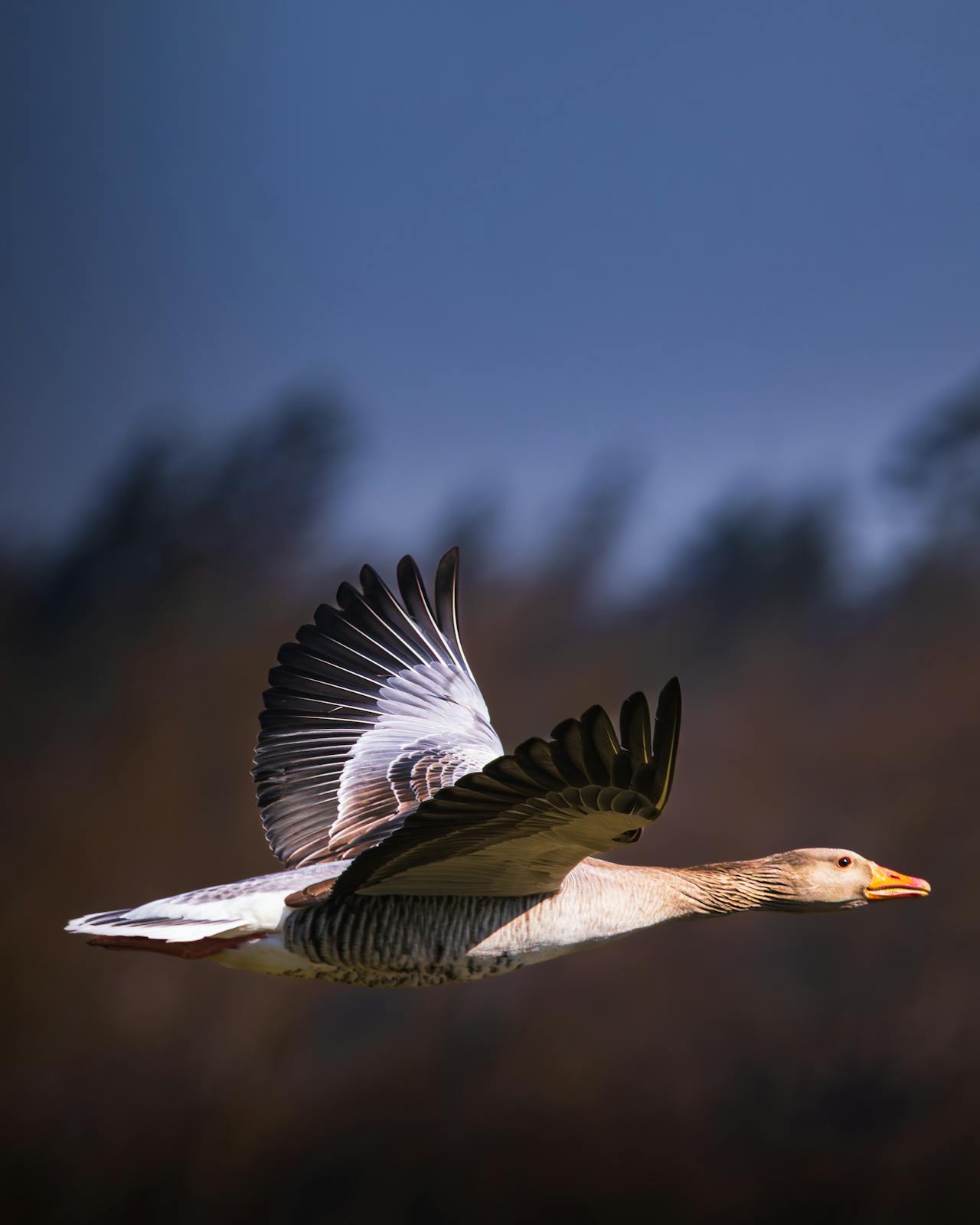
The ancient Irish had it right when it came to Pentecost. In the old Celtic tradition the Holy Spirit is not represented as a white dove, tame and pure, but by a wild goose! Geese are not controllable; they make a lot of noise, and have a habit of biting those who try to contain them. Geese fly faster in a flock than on their own. They also make excellent guard dogs, used for this by the Romans.
The Celts had it right. The Spirit is like a wild goose. It comes not in quiet conformity but demanding to be heard. And its song is not sweet to many. This Sprit drives people together, demanding they support and travel with one another. And it often forces those on whom it rests to become noisy, passionate, and courageous guardians of the gospel.
Pentecost is the wild goose of a Patrick risking his life to evangelise the Emerald Isle, a Francis Xavier traversing the East and dying there to spread the gospel, an Oscar Romero preaching the Gospel to those in power who would pretend to be followers of Jesus, a Nelson Mandela who would preach equality and freedom to those imprisoned by hate.
The noisy goose of Pentecost is the whistle blower, the soup kitchen helper, the leaders of support groups for those living with addiction, the people who care for those alienated and alone, the people of the Gospel who can reach out to all with God’s love.
The wild goose of Pentecost has descended on the disciples of every age, making them the noisy, irritable people, fighting for justice, welfare reform, running drug clinics, helping people to find jobs, trying to make a difference.
They are the people who look hard at what we do not see, or choose not to see: the homeless lying in the street, the refugees struggling for life in our midst, those released from prison who battle against all the odds and against such prejudice to get back on their feet.
The geese babble, “That’s not right!” while too often we, shielded by glitz and comfort and our own security, just go on with our safe and protected lives. The raucous goose of a Spirit makes some people bold enough to shout out a truth we would rather not hear; namely, that, worldwide, the wealthiest one percent own forty percent of the total net worth, which is more wealth than the bottom ninety percent combined own.
These geese say to look at the facts: A United Nations report a few years ago pointed out “Worldwide, a small number of billionaires control assets greater than the combined annual incomes of countries with forty-five percent of the world’s people.”
These geese point out the inequities and upset us; they nip at us in our comfort. And of course we need to be nipped. We live in a very carefully crafted and controlled world. We see images all the time of sophisticated people drinking, young people shopping, gorgeous homes, luxury cars, sleek celebrities, endless entertainment. Looking, feeling, smelling nice. These incessant images are powerful factors that create our tiny isolated world. No advertiser would dare show us who makes their products in the Third World, or tell us that we’re a tiny, tiny minority, an island of relative affluence in a world of hunger. We are protected and protect ourselves from the reality. But the fact is that the truth is the truth.
By not seeing and paying attention to these realities we are content. Then along comes Pentecost, and once more the terrible Spirit loudly crashes through the closed doors of the media and our high walls of safety and falls mightily on the church and tells us, burns into our consciousness, that if we, the church, are to be anything like Jesus Christ, have any sense of mission, any identity at all, this Church of Jesus Christ must bring harmony and unity out of the babble of voices seeking their share of this world’s goods.
This Spirit tells us that the Church, you and I, like Jesus himself, must identify with the poor and the needy and know deep in our hearts that caring for others is the birthmark of the new church and the validity of the present Church and if it doesn’t meet that measurement, it is a false religion or one which, as the Scripture says, has left its first love. The trouble is that we’ve forgotten all that.
Somehow we’ve tamed the Spirit, banked the fire and domesticated the dove. We go along seduced by the gentle, lulling cooing…until, every once in a while, we hear that honk.
That honk is the noisy, Pentecostal Spirit sounding the original note of responsibility and social justice, and recalling to our memories those unnerving stories of the Good Samaritan and the Rich man and Lazarus, thereby reminding us that the heart of the gospel, the criterion for salvation, is precisely those words of Jesus we call the corporal works of mercy – and our salvation literally depends on fulfilling them.
This Pentecostal goose is annoying and vulgar and loud: we can do without the unpleasantness of the prophets who disturb our Christian cosiness, and shout at us to care for the orphan and widow, and make us attend to Jesus who embraced the poor and needy, and James his apostle who reminded us that faith without works is dead.
We have to admit that the ancient Celts were on to something. We should pay attention to them and take a second look at Pentecost which is not a sweet feast of gentle doves lulling us to self-satisfaction. It is, as they realised, a feast of geese: noisy, dirty geese who shout for the Lord, bite those who would exploit the weak and gather in community for worship and effectiveness.
The next time we hear the geese flying overhead, we should think of Pentecost and the church and ourselves and our lives as disciples on whom the Spirit has descended. Let’s think about what we must do to live as disciples.
Let’s think of the symbols of Pentecost: the red for passion, fire for action, and a common language of mercy and compassion that will quiet the babble of voices in despair.
Passion, fire, mercy, and compassion: that’s what Pentecost is all about and honking prophets who remind us that those are the marks of the Church yesterday when it was founded, today and forever.