St. Patrick’s Day

Status

I turned with all my heart to the Lord my God, and he looked down on my lowliness and had mercy on my youthful ignorance. He guarded me before I knew him, and before I came to wisdom and could distinguish between good and evil, He protected me and consoled me as a father does his son.

patrick

Anniversary November 19th

Status

poeny

Rev. Peter Davern 1930-2005

It were my soul’s desire to see the face of God; it were my soul’s desire to rest in His abode (Hymn from the Divine Office)

QUEEN OF APOSTLES

Status

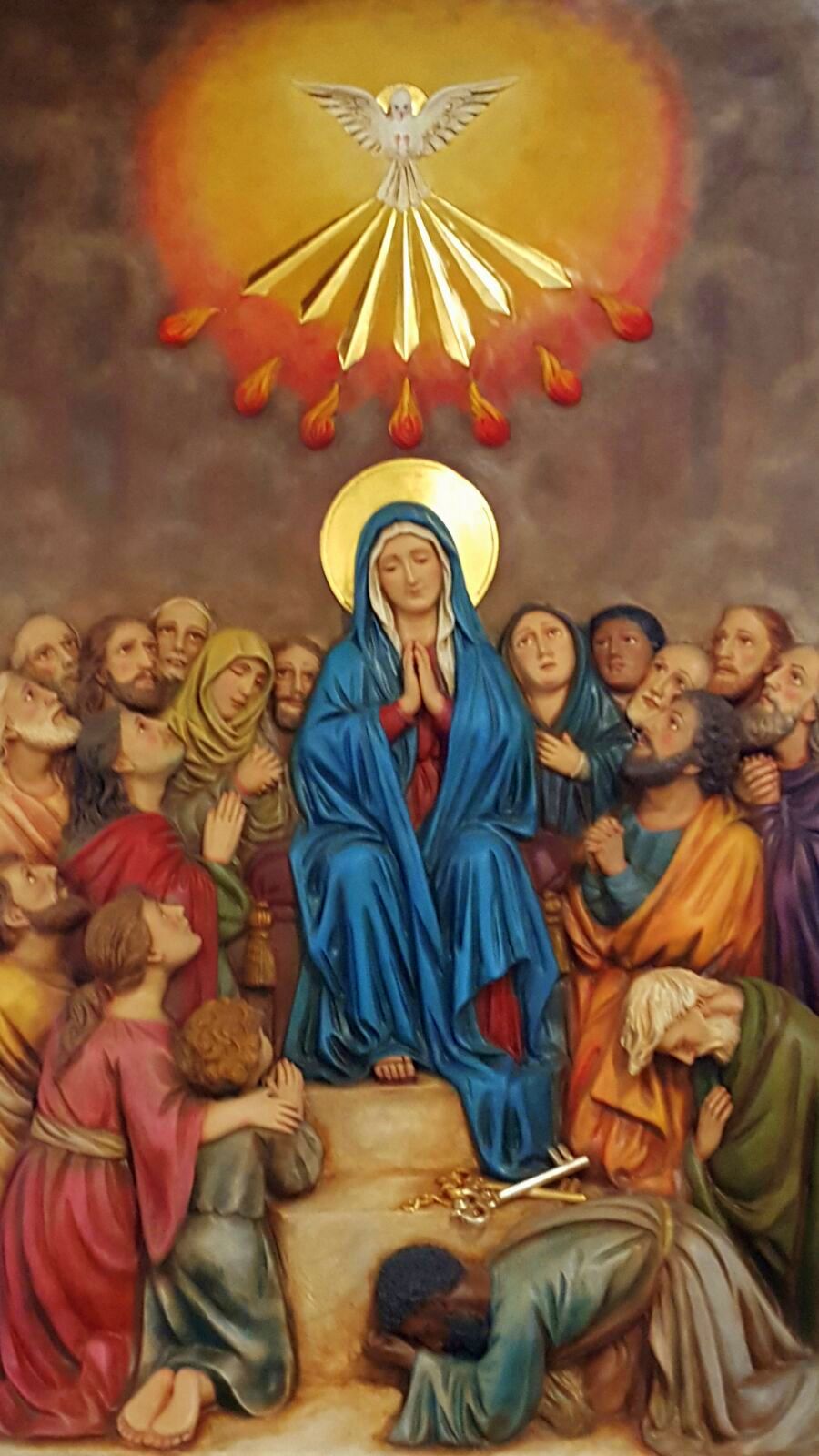
COLOMBIA CENACLEWherever I shall be, I intend to imagine myself to be together with all the creatures in the Cenacle in Jerusalem where the Apostles received the Holy Spirit. I shall remind myself to renew this desire often. As the Apostles were there with Mary, so will I be in spirit with the most beloved Mother and Jesus. As they are my special intercessors, I am confident that they will help me and all other creatures to receive the abundance of the Holy Spirit” (St. Vincent Pallotti)


Prayer to Mary, Queen of the Apostles

Bishop Seamus Freeman SAC had this image of the Cenacle-Our Lady Queen of Apostles commissioned in Colombia through Fr. Denis O’Brien SAC, when he was named Bishop of Ossory.

Novena to Blessed Elisabetta Sanna: February 8-16

Status

Greetings from Rome. In preparation for the joyful event of the liturgical celebration of the Feast Day of Blessed Elisabetta Sanna on February 17th, we invite you to pray the attached Novena in honour of  Blessed Elisabetta Sanna, beginning on February 8th. Hopefully it will become a tradition in the Pallottine Family. The Novena can also be prayed at any other time of the year. 

Biographical information
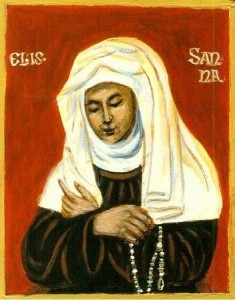
sannaElisabetta Sanna was born in Codrongianos (Sassari) on April 23rd, 1788. At the age of three months, she lost the ability to raise her arms. She married and raised five children. In 1825, she was widowed and made a vow of chastity; she was spiritual mother to the girls and women of her area. In 1831, having embarked on a pilgrimage to the Holy Land, she ended up in Rome, and was unable return due to grave physical ailments. She dedicated herself totally to prayer and to service of the poor and sick. She was among the first members of the Union of Catholic Apostolate of Saint Vincent Pallotti, her spiritual director. Her dwelling became a shrine of faith and of burning love. She died in Rome on February 17th, 1857 and was buried in the church of SS. Salvatore in Onda. Witnesses confirm and shed light on the words of Saint Vincent Pallotti, reported by Fr. Scapaticci and Fr. Vaccari: “Two people until now have carried our Institute forward: one is, as you have often understood from Fr. Vincent, Elisabetta Sanna, a poor woman; the other is Cardinal Lambruschini”. For this reason the “poor” Servant of God received the privilege of being buried in the church of SS. Salvatore in Onda, near the tomb of Saint Vincent Pallotti. When she died, her reputation for holiness was so great that, just four months after her death, a postulator was named for her cause of beatification, which however lasted more than one and a half centuries. She was declared Blessed on January 27th, 2014. The miracle which finally paved the way for her beatification, approved by Pope Francis on January 22nd, 2016, was the healing of a young Brazilian woman (31 years of age), Suzana Correia da Conceição, of an atrophy of the muscles of the right forearm and hand with grave functional impairment on May 18th, 2008 – Trinity Sunday. On Saturday September 17th, 2016 – 160 years after her death – before the basilica of Saccargia, Cardinal Angelo Amato, prefect of the Congregation for the Causes of Saints, presided over the solemn ceremony of the Beatification of Elisabetta Sanna.

Introductory Prayer:

Most Holy Trinity, Father, Son and Holy Spirit, I thank you for having enriched our sister Elisabetta Sanna in a marvellous way with wisdom, counsel and fortitude. Through her merits, I ask you to grant me the grace which I earnestly desire …………………, if this is in accordance with your Most Holy Will. 

Our Father, Hail Mary, Glory be…

Saint Vincent Pallotti, pray for us!

Blessed Elisabetta Sanna, pray for us! 

First day: wife and mother

From when she was a young girl, Elisabetta desired to become a nun. Having lost the ability to lift her arms, she didn’t think of getting married, and yet, as a young woman, many young men wanted to marry her. Thus, on September 13th, 1807, at 19 years of age, she celebrated marriage with a certain Antonio Maria Porcu, a truly good Christian of modest means. Antonio was an exemplary husband and father who loved his wife and trusted her completely. In fact, he said to his friends: “My wife is not like yours, she is a saint”! Elisabetta would say: “I was not worthy to have such a husband, he was so good”. Their family was a model for the entire area. In the following years, seven children were born to them. She spent her days between the house, the education of her children and the land, where she worked without sparing herself. And she also found time for long hours of prayer in church. She didn’t fear criticism for the faith which she so publicly professed and lived: “This is my style of life – she responded – it hasn’t prevented me from attending to my duties as the mother of a family”. She herself prepared her children for Confession and Communion and passed on to them a great love for Jesus, with much tenderness, without ever being sharp. A true education from the heart 

Prayer: 

O God, sanctifying Spirit, who love the Church your Bride, you poured the flame of your love into the heart of Blessed Elisabetta Sanna and radiated it in her family, the domestic church. I thank you for this exemplary wife and mother, for her encouraging and simple witness. Give to every woman – married, mother, single, consecrated – the grace of being a presence which forms every family, every community, into a cenacle of faith and love, in generous hard work and sanctifying service.
Our Father, Hail Mary, Glory be…

Saint Vincent Pallotti, pray for us!

Blessed Elisabetta Sanna, pray for us!

Second day: widow and bride of Jesus Christ

Of her seven children, two died at a very young age. On January 25th, 1825, her husband Antonio, attended by her, died young. Widowed with five children, the oldest being seventeen, the youngest just three, she felt responsible not only for the administration of the house and land, but above all for their spiritual and temporal education. Maturing in her spiritual path, Elisabetta made a vow of chastity in 1829, with the permission of the Franciscan Lenten preacher, Fr. Luigi Paolo da Ploaghe. She asked her confessor to reminder her often that she was a bride of Jesus Christ. 

Prayer:

O Lord, You who consoled Mary after the death of Joseph and had compassion on the widow of Nain, grant me the strength to accept my aloneness without losing myself in sadness. As you did for Blessed Elisabetta Sanna, grant me your peace, your strength and your joy, so that I may use them to serve You courageously in serving others – above all in my family, but also with those dear to me who, in your goodness, you place on my path of life, knowing that every day brings me closer to my ultimate encounter with you, together with (name of husband/wife, if applicable) 

Our Father, Hail Mary, Glory be…

Saint Vincent Pallotti, pray for us!

Blessed Elisabetta Sanna, pray for us!

Third day: pilgrim

In 1829, the young assistant parish priest, Fr. Giuseppe Valle, arrived in Codrongianos. He became confessor and spiritual director to the Sanna family, in particular Elisabetta. The Christian life of Elisabetta became even more fervent. During the aforementioned Lenten exercises of that year, the preacher Fr. Luigi Paolo spoke with great fruitfulness about the Holy Land. Together with other women, Elisabetta went to him to know more, and remained so inspired that a very strong desire was kindled in her to go to Palestine to see the places where the Son of God was born and was crucified, feeling called to follow Jesus more closely. Thus, in the first months of 1830, she asked Fr. Giuseppe Valle’s permission to go there on pilgrimage. Fr. Valle, after various explanations, said no. Several months passed however, and in July Elisabetta returned to ask him for the desired permission. After deep reflection and prayer, he agreed and decided to accompany her. They began to prepare themselves and their families discretely for the planned journey, hoping that it would help them to grow spiritually and to better serve others. Elisabetta was sure that her mother, then already 65, and her priest brother Fr. Luigi, living in Codrongianos, would be able to take care of her family during the pilgrimage. At the end of June 1831 she, along with Fr. Valle, embarked for Genoa. There the boat for Cyprus was awaiting them. At the last moment, however, Fr. Valle discovered that he lacked the visa for the East. He and Elisabetta then decided to go to Rome, saying: “There too is also Holy land”. And so they arrived in Rome on July 23rd, 1831. From the very beginning, this journey had the character of a pilgrimage. 

Prayer:

O God, always going out to encounter each person, you enkindled in Blessed Elisabetta’s heart the desire to be a pilgrim. I thank you for her encouraging witness. Give me the strength and courage to always go forward to encounter you. Becoming your disciple is the goal of all of my journeying in life. Let me learn to improve, guided by the word of the Gospel. All that I have known and learned now becomes the legacy of my existence, so that I may transmit it through the witness of my life. 

Our Father, Hail Mary, Glory be…

Saint Vincent Pallotti, pray for us!

Blessed Elisabetta Sanna, pray for us!

Fourth day: collaborator of Saint Vincent

In Rome, Elisabetta Sanna lived in a tiny dwelling near the Basilica of St. Peter’s. In her pilgrimage around the churches of Rome, yearning in prayer, Elisabetta encountered a holy Roman priest, Fr. Vincent Pallotti, in the church of Saint Augustine. When in 1832 he decided to accompany her spiritually, Saint Vincent wrote in her name to her priest brother, explaining to him that his sister could not leave for Sardinia for health reasons, but that she would do so once she improved. The Servant of God, while trying to get better, collaborated with Pallotti through prayer, counsel and help to the most needy. Unfortunately, her health got worse. Pallotti supported her in her treatment and in her spiritual growth, and also found her a small job with Archbishop Giovanni Soglia, the future cardinal, while she awaited some improvement in her health. When in 1838 doctor Petrilli wrote, “I am of the opinion that undertaking another journey by boat could lead her to an even worse condition”, Pallotti said to her: “God wants you in Rome”. And the Servant of God remained there, until her death in 1857. 

Prayer:

O Blessed Elisabetta, help me to be conscious that my happiness is in doing the will of God. I ask you, Lord, to give me the ability to accept all things that happen to me and, with Your help, always to do the best I can every day according to Your will. You can help me – as you did Blessed Elisabetta – to always listen to You and do Your will. Amen. 

Our Father, Hail Mary, Glory be…

Saint Vincent Pallotti, pray for us!

Blessed Elisabetta Sanna, pray for us!

Fifth day: woman with a disability who became an apostle

When Elisabetta was only three months old, a smallpox epidemic caused the death of many children in Codrongianos, and she too was infected. She got better, but was left with slightly twisted arms and somewhat stiff joints. This did not prevent her from growing, learning to bear her disability as something natural, to attend to most of the housework, and to always present herself neat and clean. Notwithstanding her physical disability, she became a collaborator in the Union of Catholic Apostolate, founded by St. Vincent Pallotti in Rome. Those who drew near to her would say of her: “She saw God in everything and adored him in everything. The love of God was her life. Every greater interest disappeared in the face of the interests of God”. In fact, Elisabetta herself often used to say: “My God, I love you above all things”.

Prayer:

Blessed Elisabetta who, with great patience and trust in God, bore the physical pains of illness and the mental anguish of not being able to return to Sardinia, obtain for me in my life your surrender to suffering and the ability always to live beneath the gaze of God, in order to become a docile instrument of Providence for the salvation of others. Amen.

Our Father, Hail Mary, Glory be…

Saint Vincent Pallotti, pray for us!

Blessed Elisabetta Sanna, pray for us!

Sixth day: faith in everyday life

Elisabetta received a profound Christian education in her family, about which her brother, Antonio Luigi, clearly spoke. He speaks of prayer together in family, of praying the Rosary, of participation in church functions and of help given to the poor. Elisabetta persevered in this attitude to faith and prayer throughout her life. All of the witnesses said that people only discussed spiritual things with her. When they went to her room, the conversation alternated between religious instruction and prayer. In a letter written to Fr. Giuseppe Valle on May 18th, 1846, Saint Vincent confirmed her spiritual progress with the following phrase: “She continues in good works and I hope that she will reach the perfection desired by God, the Father of Mercies”. Every morning she went to St. Peter’s Basilica. The Basilica was her home. When she died, the cry echoed out: “The saint of St. Peter’s is dead”.

Prayer:

O Blessed Elisabetta, help me to be faithful to my daily duties: to the duty of adoration which is the first necessity of my spiritual life; to the duty which unites me to my neighbour, to the particular duties of my vocation, to the duty of material and spiritual charity, conscious that dialogue with my neighbour is above all in the fulfilment of my daily duties with a spirit of faith and charity. Amen. 

Our Father, Hail Mary, Glory be…

Saint Vincent Pallotti, pray for us!

Blessed Elisabetta Sanna, pray for us!

Seventh day: spiritual mother

Another area of Elisabetta’s living out of her faith and love was that of spiritual counsel. She had the gift of spiritual discernment and she used it to help the many people who sought her help. In her poor attic, before the painting of the Madonna Virgo Potens (Powerful Virgin), she prayed with her visitors and gave them wise advice. Cardinal Giovanni Soglia also consulted her in certain matters of conscience. Pallotti himself consulted her and brought his spiritual children to listen to her. For this reason, Fr. Rafaele Melia who knew Elisabetta very well, gave her the title of “most attentive mother” of the Union of Catholic Apostolate, and Fr. Ignazio Auconi, his successor in the office of General Superior, confirmed that she had the attentiveness of a mother towards the Work of Pallotti.

Prayer:

O Mary, Powerful Virgin, help our families and communities, above all those who struggle to live in faithfulness, unity and concord! Help consecrated people always to be transparent signs of the love of God. Help priests to be able to communicate the beauty of the mercy of God to all. Help those who govern to know how to always and only seek the good of people. O Powerful Virgin, protect life in all of its forms, ages and situations. Support each one of us so that, through the example of Blessed Elisabetta, we may be able to discern the ways of God and become enthusiastic and credible apostles of the Gospel. 

Our Father, Hail Mary, Glory be…

Saint Vincent Pallotti, pray for us!

Blessed Elisabetta Sanna, pray for us!

Eighth day: a great love for the Eucharist

In Codrongianos, Elisabetta took part in the Mass nearly every day. In Rome, she was in St. Peter’s Basilica every morning and, if she didn’t have other commitments, remained there until the last Mass, because she was convinced that through the Eucharist, we can worthily give to the Lord what we should, through adoration, praise, thanksgiving and prayer. She also encouraged others to go to daily Mass. In a particular way, she adored Jesus in the Eucharist in the churches where the “40 hours of Adoration” were held, and where she remained for a long time, in profound adoration. Fr. Valle said that she managed to receive up to seven Eucharistic blessings in one day. Here the words of Fr. Melia, regarding Elisabetta’s love for Jesus in the Blessed Sacrament of the Eucharist, are proven true: “She was so devoted to and enamoured of it that she would have consecrated her whole life to continuous adoration”. 

Prayer:

 (prayer of Saint Vincent Pallotti before the Blessed Sacrament):

And you, o Seraphim, Cherubim, Thrones, Dominations, Powers, Principalities, Virtues, Archangels and Angels, come to visit the Sacramental Jesus, and adore him, thank him and love him for me; and you too, o Holy Patriarchs and Prophets, Apostles and Evangelists, and Disciples of the Saviour, o Most Holy Innocents, Most Holy Martyrs, Most Holy Pontiffs, Bishops, Doctors, Most Holy Priests and Levites, Most Holy Confessors, Virgins and Widows, and all you Saints of Paradise, come all of you and visit his most divine Son in the Most Blessed Sacrament of the Altar and, all together, now and always let us adore him, thank him, and love him. 

Our Father, Hail Mary, Glory be…

Saint Vincent Pallotti, pray for us!

Blessed Elisabetta Sanna, pray for us!

Ninth day: The serene hope

To her profound faith and her burning love for the Lord in the Blessed Sacrament, Elisabetta added her serene and joyful hope. When a certain Luigi Schiboni asked her if he would be saved, she replied: “And do you doubt it? Do you not know that a God died for your soul?” Fr. Filippo Tancioni, secretary to Cardinal Soglia who esteemed Elisabetta as a saint, said that she “had total confidence in being saved by the merits of Jesus Christ … and sought to inspire the same trust in everyone”. She often repeated: “I trust in the God of Mercy”. In moments of nostalgia for her family in Sardinia she exclaimed, “mercy, mercy”. These and similar exclamations, rooted in her very lively faith and great love for God, developed in her the serene hope to reach Paradise. Thus, even while still in Sardinia, she composed a kind of poetry (Lauda): “I am completely of God, I am completely of Jesus. I can no longer live far from God. Jesus is my heart, and I am of Jesus!” She expressed her desire in this serene manner: “I would like Heaven full, Purgatory emptied, Hell closed”. 

Prayer:

O Blessed Elisabetta Sanna, I admire your courage and constancy in imitating Jesus with faith and serene hope even in the most difficult situations. I am ashamed of my frequent lack of certainty, of my laziness and my lack of coherence: help me to become fully responsible for the gift of faith and thus to always do good with a Christian spirit, so that my neighbour may more easily join with me in praising the Most Blessed Trinity. Amen. 

Our Father, Hail Mary, Glory be…

Saint Vincent Pallotti, pray for us!

Blessed Elisabetta Sanna, pray for us!


Dear Members of the Union of Catholic Apostolate

ANNIVERSARY FEBRUARY 17TH

Status

ANNIVERSARY FEBRUARY 17TH


feb2
Rev. Patrick Whelan 1922 -1973

O Lord, how precious is your love. The sons of men find refuge in the shelter of your wings. In you is the source of life and in your light we see light. (Psalm 36)

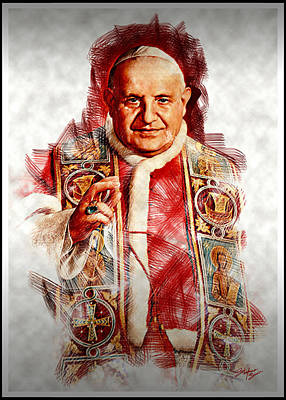
Prayer for Strength – Pope St. John xxiii

Status

Prayer For Strength – Pope St. John XXIII

Every day I need you, Lord, but today especially,

I need some extra strength to face whatever is to come.

This day, more than any other day,

I need to feel you near me to strengthen my

Courage and to overcome any fear.

By myself I cannot meet the challenge of the hour.

We are frail human creatures and we need a Higher Power to sustain us in all that life may bring.

And so, dear Lord, hold my trembling hand.

Be with me, Lord, this day and stretch out your powerful arm to help me.

May your love be upon me as I place all my hope in you. Amen.

Pope Saint John XXIII.

Novena of Joyful Mysteries for the Protection of the Unborn

Status

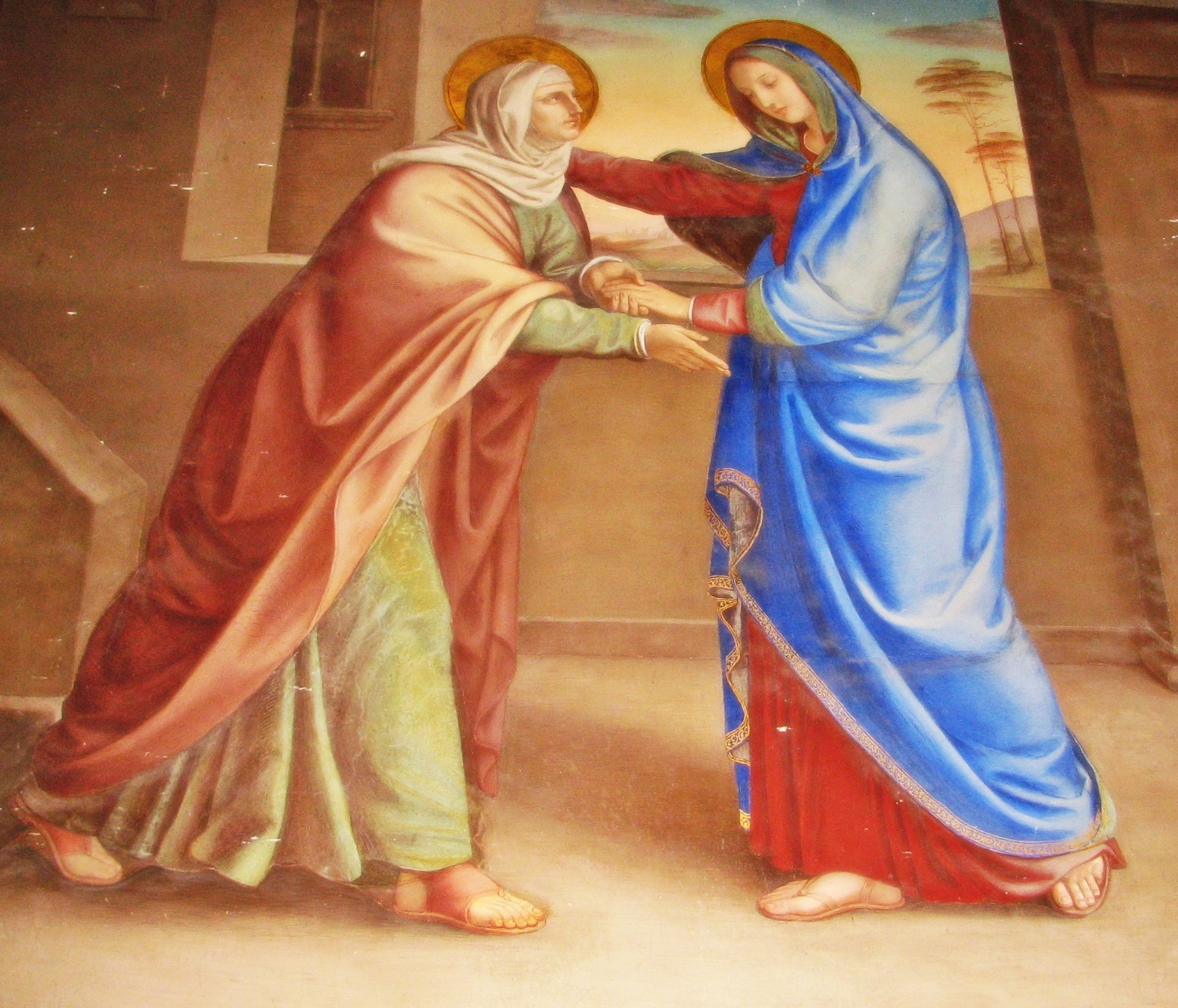
BEHOLD, THE CHILD IN MY WOMB LEAPED FOR JOY…(Luke 1:44)

Novena of Joyful Mysteries (Click on the image of the Visitation to get a podcast of the Joyful Mysteries)

Lord teach us to pray in Spirit and in Truth

May 25th is the birthday of St. Padre Pio and the anniversary of the Referendum on the 8th Amendment in Ireland.

You are invited, wherever you are, to join in a Novena of prayer by saying the Joyful Mysteries of the Rosary every day from May 17th to the 25th. They are the mysteries of conception, pregnancy, birth and life.

You may already have committed to some other form of Novena – what matters is to prepare by prayer.

The period of the Novena also includes the birthday of Pope St. John Paul II 

St. Padre Pio, pray for us

St. John Paul II, pray for us

St. Gerard, pray for us

Mary Queen of Apostles, pray for us

Mother of Divine Love, pray for us

St. Vincent Pallotti, pray for us 

Prayer for Life by Pope John Paul II

Mary, bright dawn of the new world,
Mother of the living,
to you do we entrust the cause of life:
Look down, O Mother, upon the vast numbers
of babies to be born,
of the poor whose lives are made difficult,
of men and women who are victims of brutal violence,
of the elderly and the sick killed
by indifference or out of misguided mercy.
Grant that all who believe in your Son
may proclaim the Gospel of life
with honesty and love to the people of our time.
Obtain for them the grace
to accept that Gospel as a gift ever new,
the joy of celebrating it with gratitude
throughout their lives
and the courage to bear witness to it resolutely,
in order to build,
together with all people of good will,
the civilization of truth and love,
to the praise and glory of God,
the Creator and lover of life. Amen!

PRAYERS FOR NOVEMBER

Status


INTERCESSIONS FOR THE DECEASED AND THE BEREAVED

We remember our own dead and our own sadness … Tears speak out our grief, but they also witness to our love and we are glad to have loved so much that we can cry.  May those we have loved rest in your embrace, O Lord.  

Click HERE for more intercessions

DAILY PRAYERS FOR NOVEMBER

ALL SOULS DAY

Prayer for the Release of a Loved One from Alcohol or Drug Addiction Through the Divine Mercy and Love of Jesus

Lord Jesus, I put myself into Your hands this day. I ask You, with all my heart, to cure the terrible addiction to alcohol (drugs) in (name the person). Create in them an intolerance for alcohol (drugs) that will prevent them ever offending those who love them again. And grant their loved ones the grace to forgive them for all the hurt they have caused. Through the Divine Mercy and blood of Jesus, I also pray that they will be healed of all withdrawal symptoms of this terrible affliction. I sincerely ask this, in the name of Jesus. Amen

Prayer for Mercy for the Dying

O merciful Jesus, lover of souls, I beseech You, by the agony of Your Most Sacred Heart and by the sorrows of Your Immaculate Mother, wash clean in Your Blood the sinners of the whole world who are now in their final agony, but especially those on their way to eternal damnation and who are to die this day. Heart of Jesus who suffered death’s agony, I beg You have mercy on these poor souls. Amen

Prayer for Mercy for the Souls in Purgatory

Eternal Father, I offer You the most precious blood of Your Divine Son, Jesus, in union with the Masses said throughout the world today, for all the holy souls in Purgatory, for sinners everywhere, for sinners in the universal church, for those in my own home and within my own family. Amen

Being Transformed and Helping Transformation

Status

Being Transformed and Helping Transformation – Liam O’Donovan SAC

Liam Donovan sacWhen Fr. Liam suggested that I base my talk on the Transfiguration I was struggling, with what to talk about. I asked a number of people for ideas and the reoccurring theme was transformation. So the general theme is “Being Transformed and Helping Transformation.”

When I first began to as I read and meditated on the Gospel I couldn’t see transformation. OK, Jesus is transfigured, but, as we will see, the disciples are not transformed by this experience. Their attitude before and after doesn’t seem to change. But if we take into consideration what frames the account of the Transfiguration, the events occurring before and what its leading up to we can see the disciples are being prepared for transformation.

Let’s just imagine the scene for a moment:

 Jesus decides to go up the mountain and he brings three of his disciples with him Peter, James and John. A few days earlier the Jesus made the first prediction of his forthcoming passion, his suffering and death. Peter as we know was scandalised and he rebuked Jesus for this: “There’s no way I’m going to let this happen.” He was full of his own ideas of what he wanted. You can just imagine him insisting with Jesus you know, “this is the way it is going to be—let there be no talk of this suffer and dying business.” He wanted to control the situation. But Jesus was quick to set him straight. “Get behind me Satan. He identified Peter with Satan, speaking on behalf of Satan by opposing to the cross. He accused Peter of thinking in human way and not God’s ways. And then he calls all disciples together and announces: You cannot come after me unless deny yourself take up your cross and follow me. Any who saves his life will lose it; anyone who loses his life for my sake and the sake of the Gospel will save it. The disciples thought they had it made; by being close companions to Jesus the Messiah they were going to have honour, power, privilege, wealth and glory. But Jesus completely overturns their ideas teaching them that disciples of the kingdom are to lay down their lives for others in imitation of him.

So as their heading up the mountain they must have been disturbed by these ideas; their heads must have been swirling. There on the mountain Jesus’ glory was revealed. His face shone and his clothing became radiant. For a moment the veil of his humanity, which had been shrouding his divine identity, was lifted. After this glimpse of Jesus’ glory, Peter, James and John were convinced beyond a doubt that Jesus was no mere human teacher, but the Son of God.

So did this experience transform the disciples? Not really; not at all actually. Soon after they were squabbling among themselves about who was the greatest among them. And James and John, who were with Him on the mountain, requested that they would have seats at his right and his left in his glory. They were still in this mind set of personal glory, and prestige, their attitude hadn’t changed a bit.

Their transformation only takes place after they go through the experience of the suffering, death, and resurrection of Jesus. Only then can they enter the life of the Spirit and finally give their own lives in imitation of Christ. What sustained the disciples through this was their experience at the transfiguration. These three who were to lead the disciples were able to endure the terror and tragedy of Christ’s passion because they had had been given a glimpse of the glory of the risen Christ. This gave them strength and hope to persevere.

Relevance for us

So how is this relevant to us as Christian today, as members of the UAC. A predominant theme that the Transfiguration speaks to us of is our prayer life. St. Pope John Paul II said about the our relation to the Transfiguration: “Like the three chosen disciples, the Church contemplates the transfigured face of Christ in order to be confirmed in faith and to avoid being dismayed at his disfigured face on the Cross.” So the story of Transfiguration is directing us to prayer, to contemplate Christ so that we can receive the grace, the strength, the hope we need as we face our daily crosses—the struggles and trials that we encounter in our lives. We can all I’m sure identify with the apostles as they go up the mountain with their hearts full of worry and anxiety. I know I often enter prayer with the distractions of what has happened that day or what burdens lay in the future. But that hour in front of the Blessed Sacrament, this encounter with Jesus, seems to bring a peace to any situation and the courage to face the challenges that come my way.

It’s not that you have to have dramatic experience like the apostles. I once read a story about St. Jean-Marie Vianney (The cure’ of Ars). He once noticed a man come in to the church and stay for hours in front of Jesus in the Blessed Sacrament. The Cure asked the man what do you say during all that time before Jesus in the Eucharist? The man replied, “Nothing, I look at Him and He looks at me.” 

What passes between you and the Lord can often be hidden form you—it’s deeper than senses and emotions. As the story of the disciples shows us we’re not in control of what is given to us in prayer. It’s not so much what we say or do, but just gazing at Jesus and obeying the Father’s command “To listen to Him” with an open heart. Allowing the grace of the Lord to pass over us. This is particularly true when we receive the Eucharist, our Transfiguration encounter par excellence, our food for the journey.

The rule St. Vincent Pallotti left for us is the imitation of Christ.  Of course he understood that this could only be accomplished by contemplating Christ. He said:

“Never lose sight of the divine Exemplar, Jesus, but always contemplate him with the trust of receiving the grace of imitating Him.”

(All quotes from Pallotti taken from Yearning of a Soul: A study of St. Vincent Pallotti’s Spiritual Doctrine by Flavian Bonifazi, S.A.C)

So in prayer we contemplate how he acted, how he spoke, how he dealt with people, how he prayed. We bring this contemplation to prayer because it’s not just a question of thinking about these ideas, but allowing grace to act in us so that they become part of us. Again Pallotti wrote:

“Every Christian piously enjoys the thought of imitating Jesus, but only a few constantly and really strive to imitate Him because only a few pay attention to it. The more people internalise such religious thought, the more they will strive to imitate Him and, consequently, the more the love of Christ increases in them.”

The truth is that we faced with different challenges and situations than Christ did. Our society, our context, our world is not the same as His was, so we can’t just look at his external actions and say that this is what I have to do in this situation. We need to internalise them, to have his Spirit so that we can do what he would do if he was faced with our challenges and trials. This is what our prayerful contemplation and listening are about.

“To effectively imitate our Lord Jesus Christ, we must above all have His Spirit. Thus, all the interior operations of our soul become similar to those of the same Lord Jesus Christ.”

So as we face the challenges of our lives we have this we can respond almost instinctively as Jesus would because we have his Spirit.

Going down the Mountain toward Jerusalem.

Notice Peter’s reaction to seeing Christ in this glorified state with Moses and Elijah at his side: “It is wonderful for us to be here,” he says. He wanted to build three tents, he wants contain this wonderful experience, to remain on the mountain. But he had to go down the mountain, to follow Jesus on the road to Jerusalem, to his passion. And it’s the same for us. If we want our lives to be transformed we have to follow Jesus on his journey to Jerusalem. In the same way we have to pick up our cross and follow Jesus—our spiritual life is not about remaining in the church or the oratory. Our prayer life enables us to face the challenges and trails of life that ultimately bring transformation.

Jesus said “Unless a grain of wheat falls to the ground and dies it remains only a single grain; but if it dies it yields a rich harvest.” To be fruitful in the apostolate means that we have to enter in the Paschal mystery—to be united to the dying and rising of Jesus in our own life. This after all is a mystery that we enter into at baptism. St Paul wrote:

“Do you not know that all of us who have been baptized into Christ Jesus were baptized into his death? 4 Therefore we have been buried with him by baptism into death, so that, just as Christ was raised from the dead by the glory of the Father, so we too might walk in newness of life.”

(Romans  6:3-4)

So at baptism each of us enters into this paschal Mystery of Christ—we die with him and we rise to a new transformed life. But baptism isn’t just a once off event. It’s something we live out each day of our life. We cooperate with the grace of our baptism by doing what he asked us to do: to deny ourselves to pick up our cross and follow him. By uniting our daily trials and sufferings with his cross and in a sense dying with him we are transformed, brought to a new and resurrected life. Our failures, oppositions, our struggles with sin and temptation, our sickness, troubled relationships, anxieties and fears, our loss and grief these are all sufferings that we have to face in life on way or the other. But if we accept them with the eyes of faith they can bring about a transformation in our lives.

I remember when I began to rediscover my faith in my late twenties I was lucky enough to come across a lay community called the Foyers of Charity. My aunt asked me if I would do a retreat with them and looking back it was a transfiguration experience for me. The whole week was filled with light so much so that I decided to join the community as a lay member soon after. I spent two grace filled years with them and loved every minute of it. However, it was easy for we in a way on one level—as a reserved person that I naturally am I didn’t really have to put myself out there, I could just work quietly in the background. But eventually to priesthood I felt called down the mountain, to follow Jesus on the road to Jerusalem. The truth is even though I was happy, I wasn’t really fulfilled, I wasn’t growing as a Christian. The Lord was calling me to face my fears and the challenges of a more involved in priesthood. There’s no other way to fulfilment or transformation.

Ronald Rolheiser—his a Canadian priest who write for the Irish Catholic, calls this a Spirituality of the Paschal Mystery. This idea that united with Christ we accept and live out the paschal cycle, dying to ourselves and being resurrected/transformed more and more into the image of Christ each day. Just to be clear it’s not that we are to accept everything that comes our way. We don’t accept bad behaviour or abuse. We don’t become a doormat.  As Christians we stand up for what is good and right and just and try to bring good order to our relationships and situations. But Jesus clearly calls us to accept these daily crosses that come our way the little and the great. So for example, dying to myself when I’m called to visit this sick or lonely person even though I don’t feel in the mood for it. Or when I part of a group not always wanting to get my own way to control everything, but letting go and giving way to what others think. And this way of acting brings about a transformation in me and brings a greater richness to life.

Of course it’s not easy to accept the cross. There are some that are incredibly difficult to explain.  I don’t know if any of you saw Gay Byrne’s interview with Stephen Fry. His an English actor and TV personality; his one of these militant atheists like Richard Dawkins. The main reason for his disbelief is the incredible suffering in the world. How could a good and merciful God allow this to happen? And humanly speaking he has a point it’s a really difficult to accept certain things. But form a Christian perspective, we realise that God the Father did not spare his own Son from the fate of suffering and death, and that through it He has brought the ultimate hope, the ultimate transformation: Resurrection.

Vincent Pallotti certainly lived out this Spirituality of the Paschal Mystery in his life. He understood how essential it was for the Christian life, to the extent that he prayer for suffering. He wrote,

“Grant me, O God, the gift to live perpetually occupied in the most perfect compassion for all the mental and physical pains suffered by Jesus and Mary…Deign further to give me now and forever, with perfect fullness, the painful and meritorious participation in all those pains suffered by Jesus and Mary.”   

And to his followers he encouraged:

Long for food as you long for the cross and long for the cross as you long for food.”

It’s not that he had a morbid infatuation for suffering; it’s not that he saw it as an end in itself. He realised it was essential to bring about transformation in his life to make him more and more into the image of Christ. He always had the apostolate in the forefront of his mind.

“The more mortification and suffering we endure out of love to imitate Jesus in His sufferings, the more we shall have the grace to do the work of eternal life.” St. Vincent Pallotti

So the more we are transformed by our crosses the more grace can flow through us into the world. Pallotti in fact prayed to become a ‘Prodigy of God’s Mercy’ an outstanding example of how God’s grace can transform the most miserable sinner & nothingness as he Pallotti referred to himself.

“My God, I ask You that my mind and heart be always activated by an affectionate feeling of trust that you will work a miracle of mercy upon me, that you will do this by communicating to me many graces, favours, gifts and mercies for the purification and sanctification of my soul, and that You will transform me into You. Thus You, the abyss of mercy, will shine brightly in me, the abyss of misery.”

This is what his acceptance and even desire for suffering was about for Pallotti. To be transformed to the extent that Christ himself would be see in Pallotti.  And this is the result of our suffering with Christ, transformation into his image, that Christ will shine through us and bring hope to the suffering world. That we manifest God to others, that in a sense we bring a Transfiguration experience to others as the resurrected Christ shines through us. So before we say anything we proclaim the gospel to others. Pallotti’s life is a testament to this truth.

The Paschal mystery is the beating heart of the Church’s mission! And if we remain within this mystery, we are sheltered both from a worldly and triumphalistic view of mission and from the discouragement that can result from trials and failures…And it is from the Cross, the supreme act of mercy and love, that we are reborn as a “new creation.” (Pope Francis to Seminarians, Novices and Those Discerning Their Vocation, Homily of Vatican Basilica Sunday, 7 July 2013)


ALEPH: Silence of the Beginning

Status

Rocket Man, Starman, Life On Mars, I Am I said. Songs of my youth. Songs of identity, that interior aspect of me which reaches for the beyond. I am captivated by Voyager 1, the probe sent into space on September 5, 1977, five years to the day after I entered religious life  and on the very day I returned to the community, having been away for more than a year. 

Back then I had no knowledge of Voyager but we have somehow been travelling together these 40 years. There are journeys and journeys, I like to say. For every journey we undertake there is a deeper, spiritual significance that we are not always aware of. I have been a voyager, a wanderer pilgrim in spirit all my life – making journeys of significance and mostly journeying into the interior space of who I am; who I am in relation to others and mostly who I am in relation to God. My Mother called me Siddhartha, the nomad. 

Voyager 1 has become a kind of teacher to me, a teacher of what is beyond. The sheer immensity of its journey! When it was launched, it had an initial mission of about four years, after which it continued on an extended mission that brought it to inter stellar space, the first human made object to travel that far and it has left scientists amazed that it still works. It travels at about 60,000 kilometres per hour, having travelled a distance of over 13 million miles. If it keeps travelling it will reach what is called the Oort cloud in 300 hundred years, taking it another 30,000 years to pass through it! 

Voyager has been witness to the vastness of the universe; the sheer scale of it is staggering and it leaves me gasping in awe. And if the creation is so immense, then how much more immense is the Creator, how staggering and awesome! This is what happens to me when I read the first lines of the Prologue in John’s Gospel, “In the beginning was the Word, the Word was with God and the Word was God.” (John 1:1) and it is there that I always have to pause and from there my meditation takes off into the awe-inspiring magnitude, the wonder of what it was like in that “beginning”, which is not a beginning at all but infinity, eternity.

In the beginning there was silence, that great silence in which the Word was begotten, the Word through whom everything came into existence. Silence! Jesus says of himself, “I am the Alpha and the Omega, the first and the last, the beginning and the end. (Revelation 22:13) The first letter of the Hebrew alphabet is Aleph which corresponds with Alpha and Tav corresponds with Omega. Aleph is soundless, silent, suggesting that Jesus is the silence in the eternal beginning before being the spoken Word that gave birth to the creation. “In the beginning God created the heavens and the earth. And God said…” (Genesis 1:1-3) 

How deep are the rich mysteries of God; how inadequate language is – the words we use to express a reality that is so far beyond expression. And yet within each of us there is an innate need to reach out and grasp something of God. 

So I contemplate the great silence that is infinitely more expansive than the distance travelled by Voyager. I contemplate who God is in that reality. For compass and guide I take flight with Voyager and I am immersed in the Bible, the sacred Word of God that is alive and active with layers of deeper meaning, unfathomable depths. “I thought of my God and I sighed!” from Psalm 77 – Blessed Pope Paul VI identifies this as summing up the whole Prayer of the Church. To pray is to think of God; to think of God is to sigh with groaning beyond utterance which is nothing other than the prayer of the Holy Spirit within us (Romans 8:26). 

Above the moon and stars 

Beyond the edge 

Of what is known 

The space between all things 

The quiet dark 

The womb of light 

Where speed and stillness merge 

And distance has no measure 

A thousand years 

A single day 

Is all the same 

Where Love And Hope and Faith 

Remain pure and perfect 

Vision